Author’s note: The following essay contains descriptions of events surrounding mental health crises, childhood trauma, and death.
The man next to me in the ER waiting room kept fidgeting with a Zippo lighter. Flick on. Flick off. I am guessing it was a nervous tic. He had a shaved head and at least one swastika tattoo. I was about to turn 12 later that month, and I already knew that symbol was one of hate.
I never found out why he or his friends were sitting in the waiting room at Elkhart General Hospital (EGH) on that steamy Sunday night, due to my own reasons for being stuck in a cramped chair clutching whatever Babysitter’s Club book was out at the time.
My Mom was in a drug trial for a new antipsychotic at the time called Clozaril. Earlier that night, she’d had this strange, “Joker”-esque smile on her face and was struggling with aphasia. She couldn’t form words properly. The week prior, she’d made dinner by putting slices of cheese on plates. She’d had hallucinations beyond what her drug cocktail could keep in check.
Her doctors believed she’d had a series of mini-strokes as a result of this drug. Her psychiatrist showed up at the hospital in his pajamas to assist the on-duty physicians. I was not allowed to see her as “2 Northwest,” the psychiatric ward, had age restrictions for visitation. My Dad eventually came down and took me home, explaining my Mom was going to need to stay for a bit. This was nothing new to me. My Mom had been struggling with mental health challenges for much of my life up to that point. She’d done stints at EGH and St. Joseph’s Hospital in South Bend, as well as the University of Michigan Hospital and the Mayo Clinic. I already knew how “shock therapy” worked. Some kids went to Disney for summer vacation. I got a drive-by of the Michigan State Penitentiary in Jackson and heard the “college radio-friendly” version of that one song by George Michael in 1988.
Upon our arrival home, my Dad and I were both exhausted but wound up. We engaged in what had become our Sunday night ritual, watching MTV’s “120 Minutes.” My Dad loved music to the point that he married a musician. Despite being tone-deaf, he was passionate about it. He was also a chronic insomniac, a condition I share as a result of genetics and general anxiety disorder.
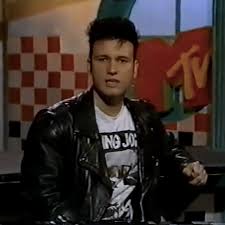
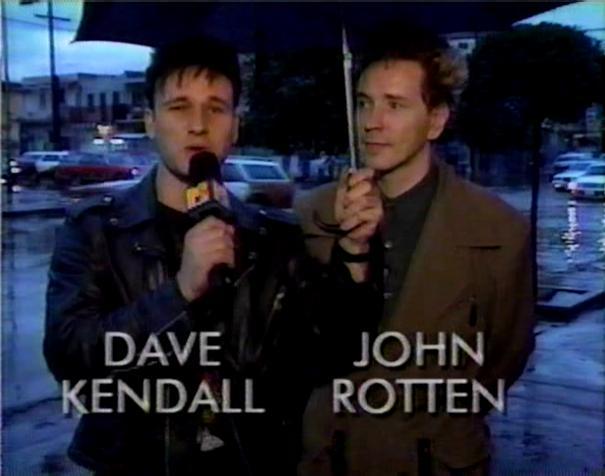
On Sunday nights, when my Mom was either hospitalized or simply went to bed, he’d stay up and watch ESPN. By sheer luck, he happened to be flipping channels one night and stumbled across Dave Kendall talking about music. My Anglophile Dad was intrigued. He was hearing newer music from across the pond for the first time. Kendall spoke eloquently about bands and held his own against some very, well, unique individuals. Anyone who watched regularly can remember the time Kendall went to Tijuana with Johnny Rotten for an episode. I coveted his moto jacket with the Sisters of Mercy logo painted on the back.
We would nap on Sunday afternoons and then stay up late to watch and learn about what would be deemed “alternative music” in the years before Nirvana blew up. With Indiana observing Eastern Time in the fall/winter, I would often not go to bed until 1:30 AM and get up for school with no problem: fleeting youth and all that.
We discovered The Cure, Depeche Mode, Joy Division, New Order, Lush, the Happy Mondays, James, the Sisters of Mercy, the Smiths, Gene Loves Jezebel, My Bloody Valentine, Catherine Wheel, and so much more, all at Dave Kendall’s behest. Even after his departure, we would tune in on Sunday nights. It was a place of stability at a time when our lives were anything but.
In many ways, watching “120 Minutes” influenced my decision to pursue broadcasting as a career. I never felt like I fit in – I didn’t play sports, I was very shy, I hid behind Coke-bottle-thick glasses, and my upbringing wasn’t what would be classified as “normal.” But talking about music was the equivalent of a light switch coming on in my brain. I wasn’t the “freak whose Mom had a nervous breakdown.” I was “cool.”
I’d even go as far as to say Dave Kendall’s influence extended into my teenage love life. My first high school boyfriend dressed as Robert Smith for the Halloween dance in 1992, and I was the only one who knew who he was because of those Sunday night viewing sessions.
I wept the first time I heard Dave Kendall’s legal ID on KEXP after my Dad died in 2016. I didn’t inherit millions or an extra house, just a record collection and a trove of knowledge. I sometimes can’t remember why I walked into a room, but I can tell you about the night Kendall premiered the video for “Fascination Street.”
With Kendall’s passing, all I can think is I hope my Dad gets to shake his hand in the afterlife and thank him for what he did for both of us.
As a final note, if anyone wants to paint the Sisters of Mercy logo on a motorcycle jacket for me, I will pay for that service as a tribute to my biggest fan and one of our predominant influences.

